What is useful before playing?
New BOMBANANA teams should assign roles, agree on yes/no/repeat/stop signals, and describe modules before touching controls. Treat the first BOMBANANA run as a communication test rather than a speedrun.
Fan-made BOMBANANA guide hub
BOMBANANA is a three-player co-op puzzle game about defusing a banana bomb with a blind monkey, a mute monkey, and a deaf monkey. This guide gives players the key Steam demo facts, manual questions, role logic, communication rules, and safe official links before they start.
BOMBANANA is not a browser game or a Roblox-style codes game. It is a Steam co-op defusal game built around broken communication. One player can touch the bomb, one player owns the manual, and one player becomes the speaking bridge. The strongest player need is understanding roles, practicing signals, and using the official BOMBANANA Steam page instead of unofficial mirrors.
Standalone Demo App 4747510 was removed from Steam on August 20, 2026. The full game (App ID 4656000) is listed for September 2, 2026; check Steam for current availability.
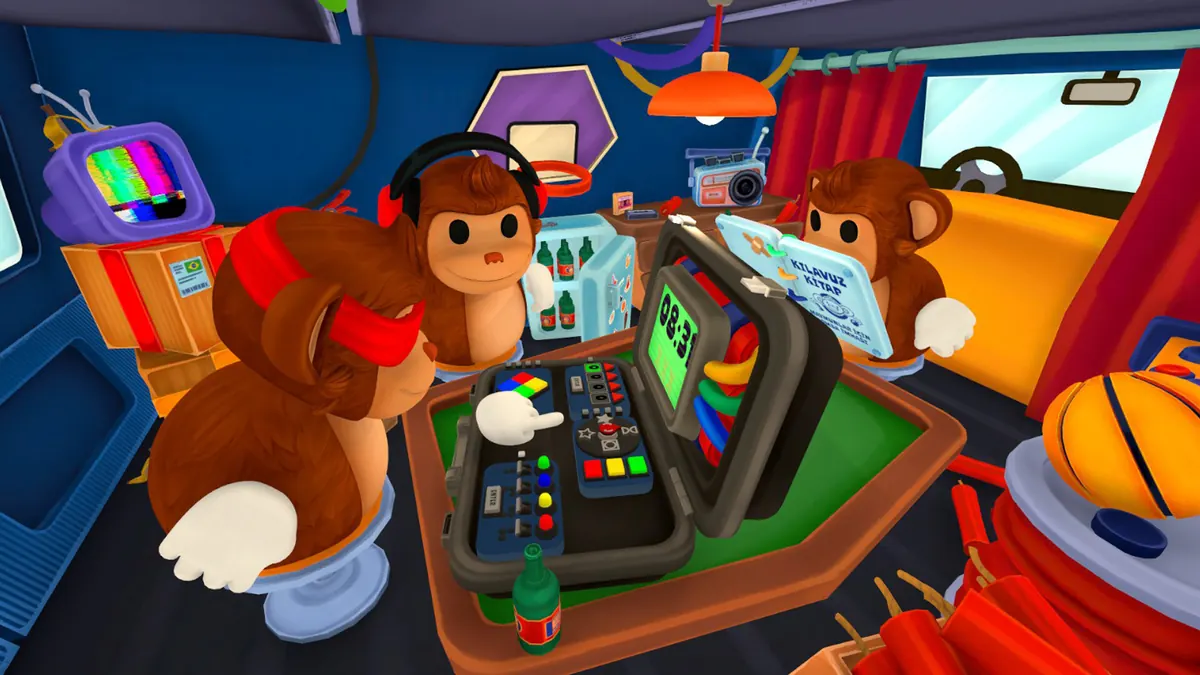
New BOMBANANA teams should assign roles, agree on yes/no/repeat/stop signals, and describe modules before touching controls. Treat the first BOMBANANA run as a communication test rather than a speedrun.
The calculator module guide on this site is based on verified module data and procedures. Do not use third-party calculators that have not been checked against the current build; use the manual guide for the rule branch and final action.
| Player question | Useful answer | Best page on this site |
|---|---|---|
| Where do I play the BOMBANANA demo? | The standalone Demo listing is no longer available; use the official BOMBANANA Steam page and avoid mirrors. | Open official Steam page |
| How does the BOMBANANA manual work? | Treat the manual as a translation problem: reduce rules into short yes/no/repeat/stop signals before moving the bomb. | Roles and signal guide |
| Can my PC or Mac run it? | The listed specs are light, but online co-op stability, voice tools, storage, and OS version still matter. | System requirements guide |
Use this BOMBANANA prep plan before the timer starts. The goal is simple: keep the official BOMBANANA Steam page as the trusted source, give every player one clear job, and reduce every manual clue into a short signal that survives pressure.
| Prep phase | What the team should do | Why it matters in BOMBANANA |
|---|---|---|
| 1. Assign roles | Choose the bomb handler, manual reader, and speaking bridge before opening the first module. | BOMBANANA punishes role confusion because each player receives a different part of the answer. |
| 2. Set signals | Define yes, no, repeat, stop, left, right, danger, and solved as separate gestures or calls. | Short signals prevent the manual clue from becoming a long explanation during the countdown. |
| 3. Describe first | The handler reports module name, visible state, order, color, number, or direction before touching controls. | A complete first description gives the manual reader enough context to choose the correct branch. |
| 4. Confirm action | The bridge repeats one final action, then the manual reader confirms before the handler presses, cuts, or toggles. | This last repeat catches left/right, color, and number mistakes before they become failed inputs. |
Use the official BOMBANANA Steam page for current availability, trailer, platform notes, release window, and system requirements. Use the former Demo record only as historical context, and avoid APK mirrors, browser-game clones, repacks, and pages that promise codes or a full manual download without an official source.
Run one slow BOMBANANA module with no speed goal. After the bomb, review the first signal that caused hesitation, rename it if needed, and rotate roles only after everyone understands what information changed hands.
For the next BOMBANANA run, change only one thing at a time. If the handler pressed too early, add a final confirmation phrase. If the manual reader gave too much information, shorten the answer to one branch and one action. If the bridge missed a gesture, replace it with a louder call or a clearer visual cue. This small-review habit makes the demo more useful than a generic walkthrough because the team improves the communication system together, not just one solved puzzle. Use the review before chasing speed.
Use these guide pages to prepare for a BOMBANANA session. They focus on practical player decisions: who should take each role, how signals should work, and where verified Steam details can be checked.
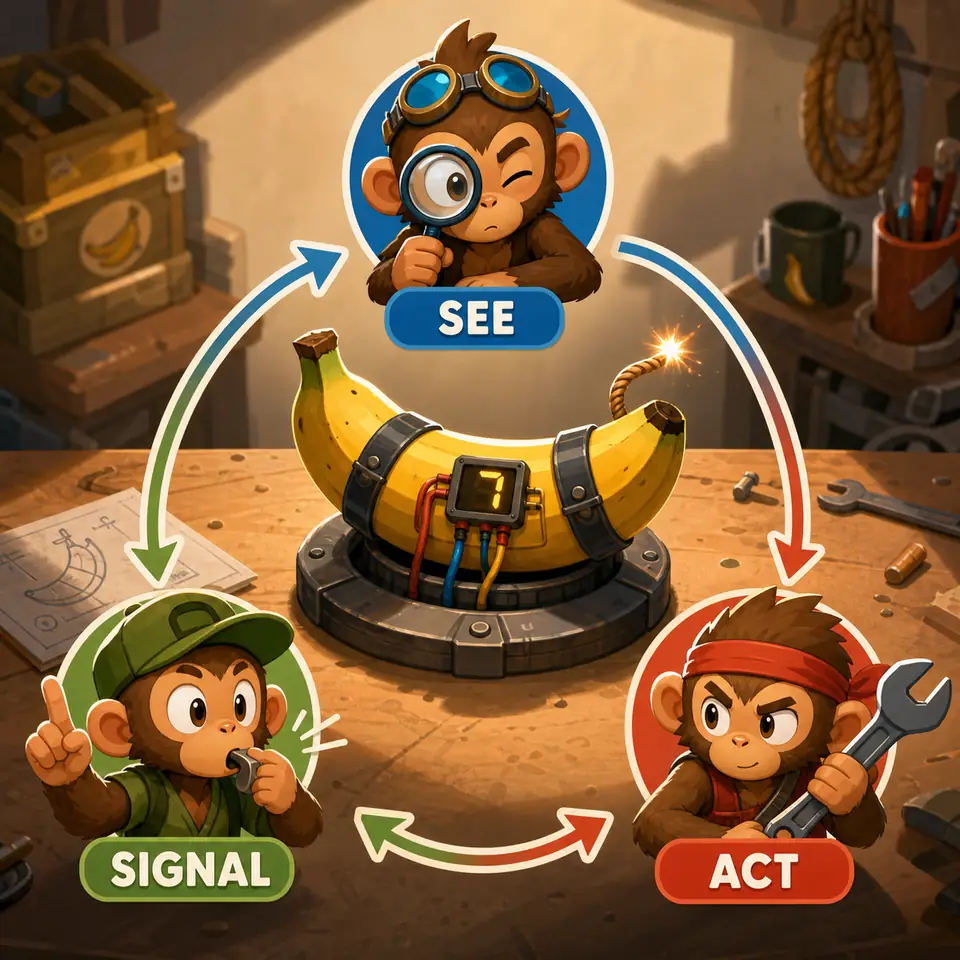
Use the manual guide as a short playbook: the blind monkey handles the bomb, the mute monkey reads rules, and the deaf monkey turns visible clues into spoken choices. The guide-book habit is to reduce each rule into one clear signal before anyone presses a control.
Keep signals atomic: one gesture should mean one thing. Before playing, agree on yes, no, repeat, danger, module left, and module right so the timer does not turn every gesture into noise.
Standalone Demo App 4747510 was removed from Steam on August 20, 2026. The full game (App ID 4656000) is listed for September 2, 2026; check Steam for current availability.
The standalone Demo App 4747510 was removed on August 20, 2026. Use this guide to understand the former demo, verify the current Steam listing, and prepare the three-player communication loop.
Learn how the three monkey roles turn seeing, signaling, and acting into one safe bomb-defusal instruction before your first demo run.
Compare BOMBANANA with Keep Talking and Nobody Explodes, We Were Here, Portal 2, Escape Simulator, and other team puzzle choices.
Use this page if you remember a monkey bomb, banana bomb, or monkey bomb defusal game premise and need to confirm the BOMBANANA title, former Steam Demo record, current official page, and safe download boundary.
Use this French-first guide when a player remembers a monkey bomb game but needs to confirm BOMBANANA, the official BOMBANANA Steam page, and safe next-step guides.
Use the seven-check setup guide to organize one host, invite two Steam friends, assign all three roles, and troubleshoot a failed session.
Separate levels, missions, bombs, attempts, and modules, then check what Steam confirms about the current demo instead of trusting an invented final level count.
Follow a repeatable scan, signal, confirm, act, and recovery order without relying on an unverified permanent spoiler list.
Choose a starter, standard, or review protocol for passing module states from the bomb handler to the manual reader and final caller.
Identify wires, directions, numbers, switches, and changed states with a fixed callout order before the manual player chooses an action.
Check whether BOMBANANA has a verified PS5 listing, PC-to-PS5 crossplay, DualSense support, and a safe official download route.
This checklist is a practical team-readiness tool, not a fake damage calculator. It helps players confirm that the communication chain is ready before a BOMBANANA timer starts.
These answers cover common BOMBANANA demo, role, tier-list, codes, and download questions using current Steam information.
Standalone Demo App 4747510 was removed from Steam on August 20, 2026. The full game (App ID 4656000) is listed for September 2, 2026; check Steam for current availability.
BOMBANANA is designed around exactly three co-op roles: blind monkey, mute monkey, and deaf monkey. The puzzle depends on those three information gaps working together.
No verified BOMBANANA redeem-code system appears in the official Steam information. A codes page would currently be misleading.
Use the manual guide on this site for role flow, signal rules, and safe manual-download boundaries. Treat any full guide book PDF or APK mirror as unverified unless the official Steam pages point to it.
Public Steam information does not give a stable final level count. Separate missions, bombs, attempts, and modules, then use dated notes from the former Demo and recheck Steam updates for scope changes.
Standalone Demo App 4747510 was removed from Steam on August 20, 2026. The full game (App ID 4656000) is listed for September 2, 2026; check Steam for current availability.